
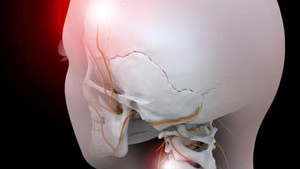
Definition:
Headache caused by a disorder of the cervical spine and its components, such as bone, disc and/or soft tissue elements, usually, but not invariably, accompanied by neck pain and stiffness.
Causes:
- Trauma such as fracture, dislocation, or whiplash injury
- Osteoarthritis or rheumatoid arthritis
- Nerve compression
- Tumor
- Infection
- The most common cause of cervicogenic headaches is an injury to the cervical facet joints
Symptoms:
- Pain almost always affects the same side of the neck and head
- Headaches are triggered by neck movement
- Reduced flexibility of the neck
Diagnosis:
Begins with a thorough clinical evaluation, including a complete medical history, analysis of symptoms, and physical examination.
Testing may include x-rays, MRI and/or CT scans, and electro-diagnosis (EMG).
The “Gold Standard” for diagnosing a cervicogenic headache is a diagnostic block using anesthetic. For example if an injection of anesthetic medication to the cervical facet joint improves or resolves the headache, it is proof that the facet joints in the neck are causing the
headache.
Treatment:
Avoiding postures or movements that provoke the pain
Maintaining a good posture while sitting or driving—by sitting tall with shoulders back and without protruding the head forward
Using a neck brace can be helpful while sitting upright or sleeping in a chair.
Other effective treatments are …
- Physical therapy
- Chiropractic treatment
- Acupuncture
- TENS/EPM units
- Facet joint injections
- Cervical medial branch blocks followed by radiofrequency ablation procedure
- Platelet rich plasma injections to the facet joints